
Light the Eyes, Light the Story (Why Bad Lighting Breaks Trust)
Equipment Purchasing Essentials Series
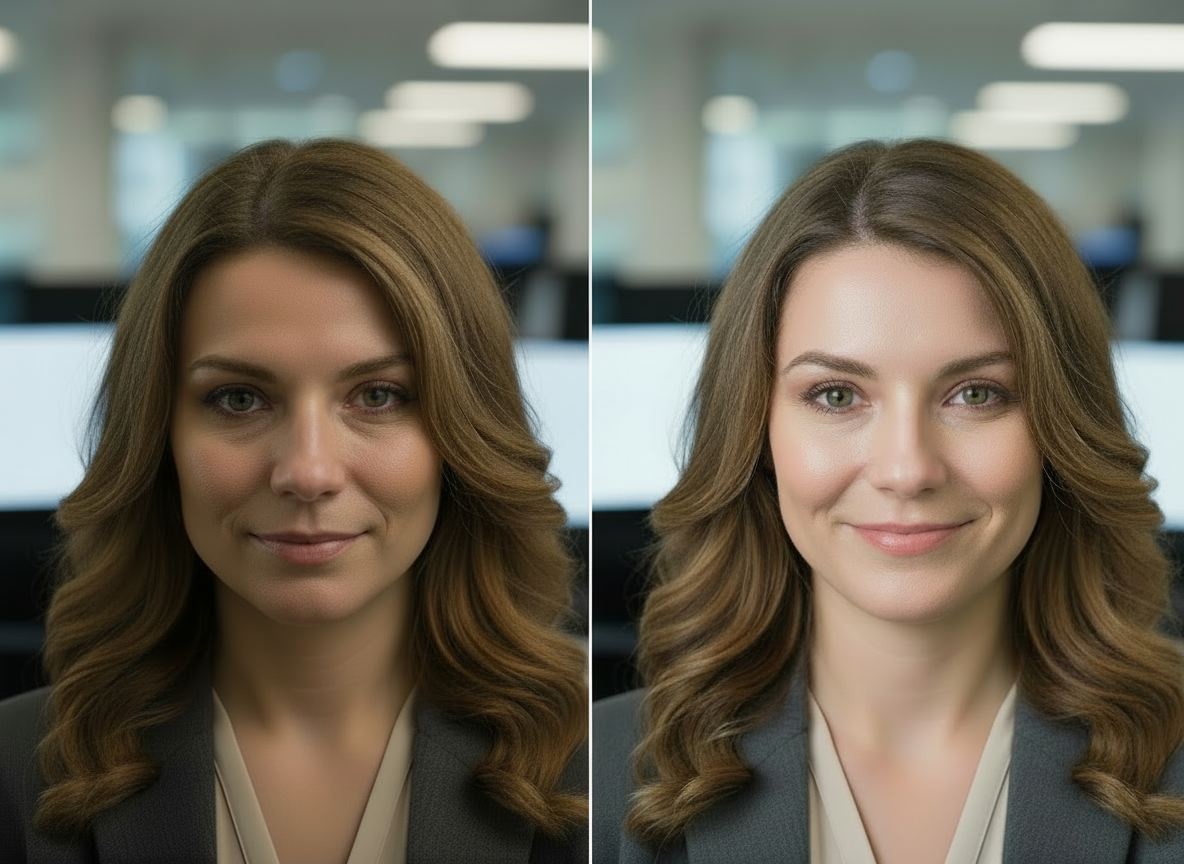
Lights! Camera! Action!
There's a reason "Lights" comes first in this classic film set saying. Without light, there's nothing for the camera to capture. That's literally what cameras do – they capture light.
Have you ever seen a professional film set? Lights everywhere. From the size of your hand to the size of a cow. That's because they're painting light onto the camera sensor (or actual film if you're working old school).
For marketing teams, this extreme isn't necessary. Camera technology can do a lot of the heavy lifting for you, but the principles of lighting still matter tremendously.
Why Lighting Actually Matters (Beyond "Looking Professional")
I could send you down a rabbit hole of lighting theory – there are entire books written on the subject. But let's focus on what matters most for your team: **audience connection and trust**.
And it all comes down to the eyes.
Humans are wired to watch and analyze other people's eyes. We pick up nonverbal cues that create feelings about the person we're watching. Simple example: You're talking to someone and they don't hold eye contact while you're speaking. Their eyes briefly align with yours, then flit around the room or worse, down at their phone.
Are you going to feel heard by that person? No.
Video works the same way. For an audience to feel connection, they need to see the eyes of anyone on camera clearly.
The Problem Your Brain Hides From You
Here's a critical fact you need to understand: **No camera or screen is as adaptive and responsive as your eyes.**
Your brain automatically processes and adjusts what you see. Cameras don't. You must use camera settings and lighting to recreate what you process automatically.
This is why you can talk to someone in an office with overhead lighting and see them perfectly fine, but when you film that same person in that same space, their eyes fall into shadow. The camera captures what's actually there – your brain was just compensating for it.
That's why added lighting isn't optional for audience connection. The light recreates in the camera what your brain processes automatically in real life.
Why Professional Sets Turn Off "Normal" Lights
In professional settings, it's common to turn off house lights (your normal overhead fixtures). This is because it's often easier to recreate the look of natural ambient light than to deal with existing fixtures and all the weird shadows cameras pick up that your eyes ignore.
For a marketing team, the manpower this approach requires isn't reasonable. You don't need to become a lighting designer.
What does your team need: Ultimately, at least one good light that helps your camera even out shadows and adds that essential sparkle to eyes.
I would prioritize these factors in your consideration: portability, ease, quality and versatility. This will ensure your team's efficiency and minimize undue hassle. The lighter to carry, easier to use, more noticeable the improvement, and more adaptable to different situations – the more likely it is going to actually get used.
Features That Matter Most for Small Teams
With portability, ease, quality and versatility in mind, here are the specific features to look for:
LED technology – Uses less power with greater output
Adjustable color temperature – Matches different lighting situations from daylight to indoor
Dimming capability – Controls intensity without changing quality
Battery operation – Frees you from outlets and tripping hazards
Compact design – Lightweight and easy to transport
Diffusion options – Softens harsh shadows on faces for better-looking footage
Three Lights Worth Considering
These are ordered from lowest to highest light output. As intensity increases, you gain more adaptability for different situations – but you also sacrifice portability and simplicity.
Pros
Pocket sized
Camera, stand and magnetic mount
Controllable from phone app
Clip on diffusion
Cons
Minimal output
Limited battery life at full power
Pros
Pocket sized (if you have big pockets)
Stand and magnetic mount
Two layers of clip on diffusion
Works while charging via USB-C
Cons
Does not include camera mount (extra mount)
Limited internal battery life
Pros
Fits in palm of hand
Stand and handheld mount
Big output to size
Works off internal battery, AC power, or USB-C power bank
Includes case, and extra power cable
Cons
Does not include diffusion and is necessary (extra softbox)
Limited internal battery life
Lighting Accessories Worth Having
Once you have your primary light, these accessories will expand what you can do and solve common problems:
Light Stands
Why you need them: Gets your light off tables and positions it at proper angles for flattering illumination
Why this one:
Tall enough to be at eye level
Stable base for these smaller recommended lights
Lightweight construction
Compact when collapsed
Extra Batteries/Power Solutions
Why you need them: Attach via USB-C to extend shooting time beyond the internal battery of these lights.
Why this one:
Single port output up to 100W
Fast charging capability
Integrated USB-C Cable
Anker Nano Charger, 100W Foldable Type C Charger
Why you need them: You’ll need this to charge the internal batteries of the lights or to run them from AC power.
Why this one:
Output up to 100W
Fast charging capability
Compact design
---
*Next in the series: Audio equipment – because great lighting won't save you if no one can hear what's being said.*
*Full transparency: The equipment links in this series are Amazon affiliate links, so I earn a small commission if you purchase through them. It doesn't cost you anything extra, and it supports me in creating more free content.*
Ready to create professional videos that truly connect with your audience? While this guide helps you navigate equipment decisions for in-house projects, Four 3rds Creative specializes in strategic video content that delivers measurable results. Sometimes the best tool is partnering with experienced professionals who understand the full scope of impactful storytelling.